Astell has been helping organisations achieve effective steam sterilisation for more than 140 years. Over that time — and in particular through validating machines across a large installed base — we have built an unusually direct picture of what laboratories genuinely put through their autoclaves, rather than what a specification assumes. This article shares that picture in anonymised, aggregate form: first the overall pattern, then a breakdown by the kind of site doing the work.
Why real loads matter
An autoclave is chosen well or badly by its loads, not its label. Knowing what actually goes into chambers across more than a hundred real laboratories is the difference between specifying for a brochure scenario and specifying for the work in front of you. Two things follow from the data: there is a common core almost everyone shares, and there is a distinct signature for each type of site.
The common core
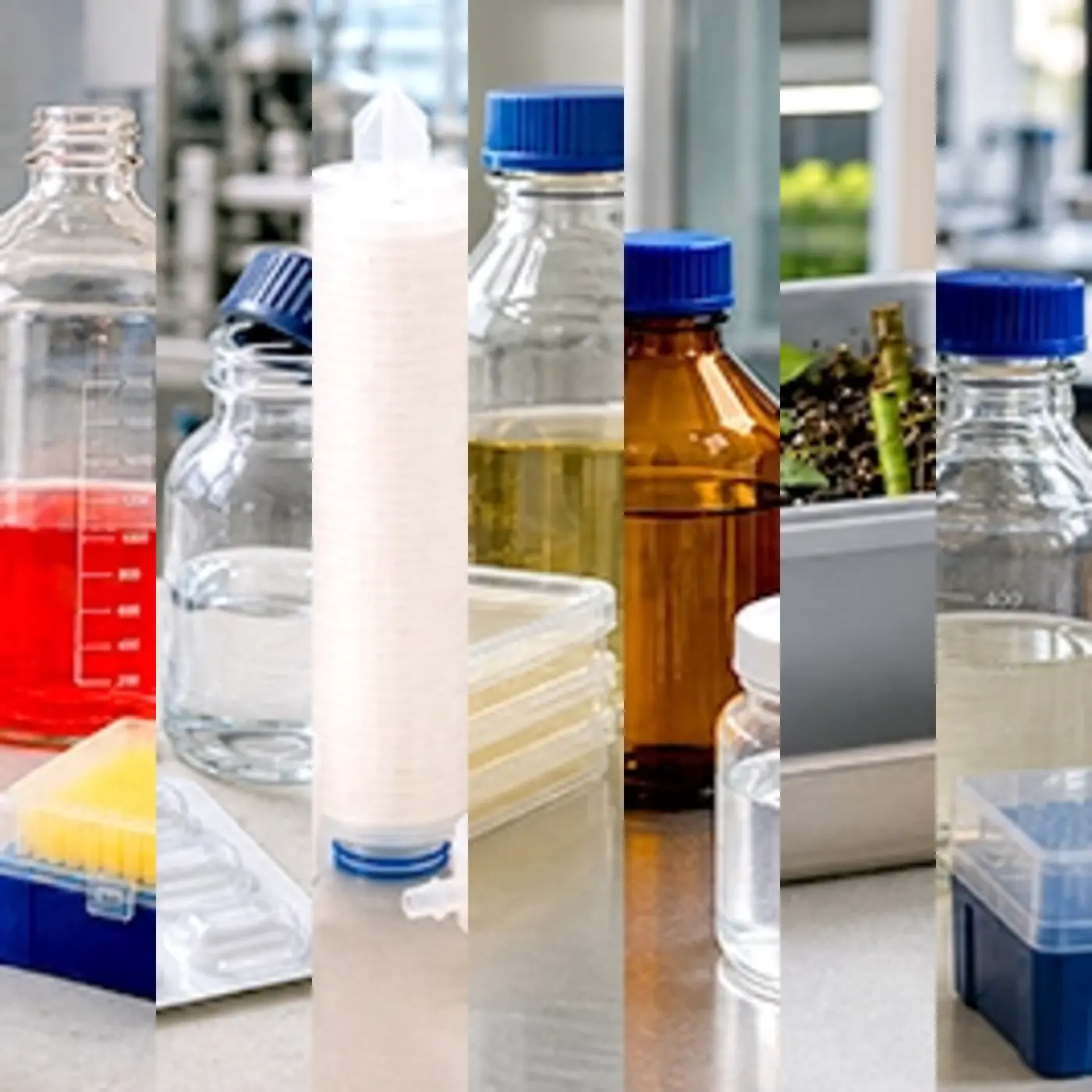
By a clear margin, the most common single load everywhere is the humble Duran bottle — 500 ml and 1-litre sizes are the everyday workhorses — carrying prepared media, broths and water, often only part-filled. Close behind come petri dishes and plates, then tubes and vials, universals, and pipette-tip boxes: the routine microbiology and cell-culture consumable stream. And running alongside all of it is decontamination on the way out — gloves, lab coats and tissue bagged in steri-bags, plastic discard and sharps. That core is remarkably consistent from one lab to the next.
Where sites differ: loads by facility type
Beyond that core, the type of site shapes the load — and, in turn, the machine. The table below summarises the pattern from the validated installed base. A note on how to read it: the formats column reflects what these sites actually run, drawn from the service data; the options column reflects the choices that typically suit that work, offered as engineering guidance rather than a count. Some rows rest on a handful of sites and are marked accordingly.
Facility type | Common loads | Formats commonly run | Options that suit the work |
Universities & teaching labs | Media and water in Durans; petri dishes and plates; pipette-tip boxes; Nalgene and sample bottles; gloves, coats and tissue as waste | A broad mix: top-loading, front-loading and front-loading vacuum, plus benchtops for smaller labs | Multiple stored programmes; simple, repeatable operation for rotating users; cooling matched to media throughput |
Facility type | Common loads | Formats commonly run | Options that suit the work |
Plant & agricultural research | Above all, spent soil and plant waste (often in dedicated boxes/bins); growth media in Durans; coats and general waste | Front-loading vacuum and vacuum-with-drying units — a vacuum-heavy population | Pre/post-vacuum pulsing for dense loads; heating jacket and drying for bagged waste; large square chamber for bulk trays and boxes |
Facility type | Common loads | Formats commonly run | Options that suit the work |
Biomedical & cancer research | Culture media and liquids in Durans; culture flasks (incl. 2-litre); tubes and vials; tip boxes; gloves, coats and plastic discard | Top-loading, front-loading vacuum and large square vacuum sterilisers | Vacuum air-removal for mixed loads; effective liquid cooling; a dedicated discard programme |
Facility type | Common loads | Formats commonly run | Options that suit the work |
Pharmaceutical mfg & CDMOs | Strongly liquid-led: media and water in Durans and universals across many fill volumes; petri dishes | Front-loading, predominantly (small sample: ~6 sites) | Load-sensed timing and flexible probes for liquids; effective cooling; full printout, audit trail and documentation for validation |
Facility type | Common loads | Formats commonly run | Options that suit the work |
Filtration & bioprocessing | Capsule filters, cartridge and housing assemblies, 47 mm and 142 mm disc holders, tubing and steri-bags; TSB media in Durans | Large square vacuum sterilisers, plus benchtop (small sample: ~5 sites) | Pre/post-vacuum pulsing for complex assemblies; vacuum-and-jacket drying; validation documentation |
Facility type | Common loads | Formats commonly run | Options that suit the work |
Food & beverage QC | Media and sample liquids in Durans; plates and petri dishes; sample bottles; filter steri-bags | Front-loading and benchtop (small sample: ~3 sites) | Compact footprint; cooling matched to routine QC; stored programmes for media and discard |
Facility type | Common loads | Formats commonly run | Options that suit the work |
Device & personal-care mfg | Small vials and containers, often saline-filled; blisters and sensor components; trays; fluids in Durans | Benchtop, predominantly, with some large square vacuum (small sample: ~7 sites) | Fluids and waste-destruct programmes; load-sensed timing; small footprint |