Astell has been helping organisations achieve effective steam sterilization for more than 140 years. Over that time, we have seen that the waste side of autoclaving is often underestimated, even though it can be the most safety-critical part of the job. This article brings together lessons from real laboratory projects where safe discard, containment and validation needed to be specified as carefully as clean media preparation.
Why waste needs its own thinking
Most autoclave conversations focus on the clean side: sterile media, clean glassware and prepared materials. Nearly every lab also uses the same machine for the opposite job at the end of the day: rendering contaminated material safe before it goes anywhere.
That 'safe out' half of the workload has its own rules. Used plates, positive cultures and contaminated plastics do not behave like neat bottles of broth, and they should not be specified as if they do.
A discard cycle is not a media cycle
Waste loads are usually taken through a more robust discard program, often held at 121°C or above for long enough to be sure the material has been made safe. It is common for a lab to run one controlled liquids program for media and a separate discard program for contaminated waste, rather than forcing one compromise cycle to do both jobs.
A typical comparison would be a bench of prepared media on a standard 121°C, 15-minute liquids cycle, while contaminated plastics and used plates are processed in a defined discard load, taken to 121°C or above and held longer, with negative pulsing to clear trapped air from the packed load.
Containment matters as much as temperature
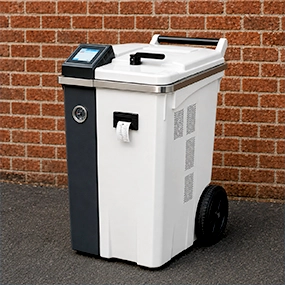
The container is a small detail with large practical consequences. Bagged plastic waste should sit in a suitable solid vessel, such as a discard container or bucket, rather than an open wire basket. That helps prevent melted plastic, spilled material and avoidable chamber cleaning.
Specifying waste containment properly protects the chamber and the users, and it makes the cycle easier to validate consistently.
Validate safely
When a waste cycle is validated, the loads presented for testing must themselves be safe. Clean stand-ins are used rather than genuinely contaminated material. The validation still tests the cycle and loading arrangement, but it does not put engineers or laboratory staff at avoidable risk. Validated discard cycles are also longer than they look on paper: in one project's validation of biological and GM waste loads, dry bagged waste in bins and sharps containers held for around 55 minutes, while denser liquid waste in Duran bottles needed close to four hours to validate — the container and the state of the waste, not just the temperature, decide how long a discard cycle actually needs.
For diagnostics, containment and microbiology labs, this point is especially important because the discard cycle is often the last controlled step before material leaves the laboratory environment.
What this means for waste decontamination
Waste rarely gets the spotlight, but it is often the more safety-critical half of the autoclave's work. Specify the discard cycle as deliberately as the clean cycle: define the waste, define the container, define the load and make sure the evidence is there when it is needed.
How Astell can help
Astell helps users specify waste decontamination cycles, containers and validation approaches around the actual materials being discarded. If you need to review your discard process, or have another autoclave-related question, contact Astell to discuss it. With hundreds of autoclaves available, highly customisable builds, versatile installation options and an expert team of in-house service engineers, Astell has the skills and experience to help solve your steam sterilixation challenges. Contact Astell today at Info@Astell.com.