Diagram 1: Essential Components of an
Ecofill Autoclave
This example is an Astell AMA240 Compact Toploading Autoclave. Frontloading benchtop versions are also available.
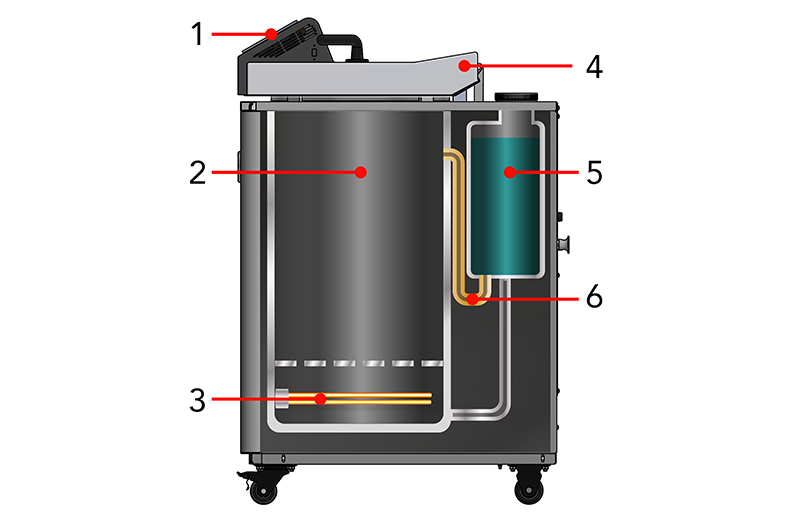
- Control Computer
- Chamber
- Heater
- Chamber Door
- Ecofill Reservoir
- Exhaust
Diagram 2:
Loading the Autoclave
The Chamber Door is opened, and baskets full of items that require sterilizing are loaded into the Chamber.
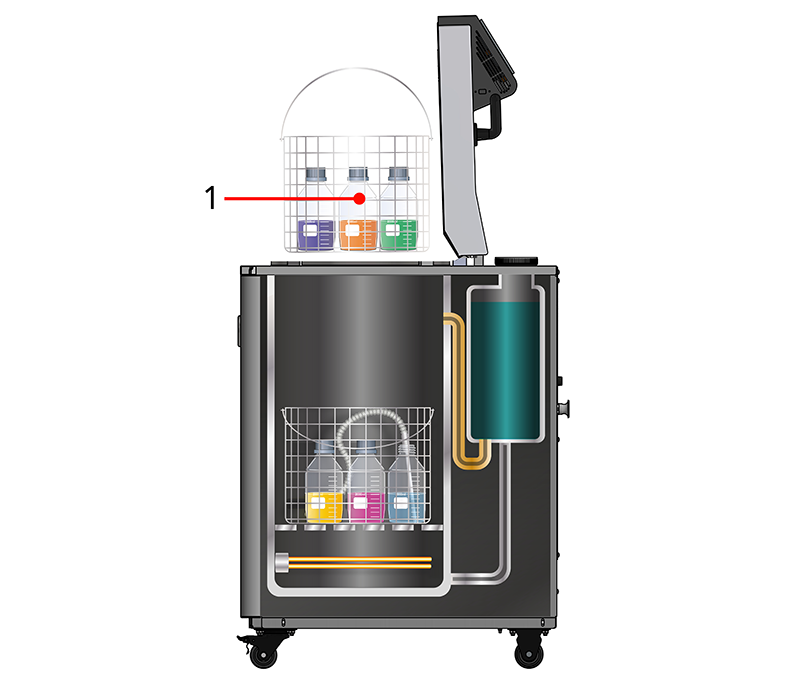
- Basket is lowered into the Chamber
Diagram 3:
Starting the Autoclave Process
The autoclave is activated via the control computer, which automates and controls the process of sterilization. First, it opens a valve allowing water to flow into the chamber under the force of gravity. Once the chamber has enough water, the valve is shut.
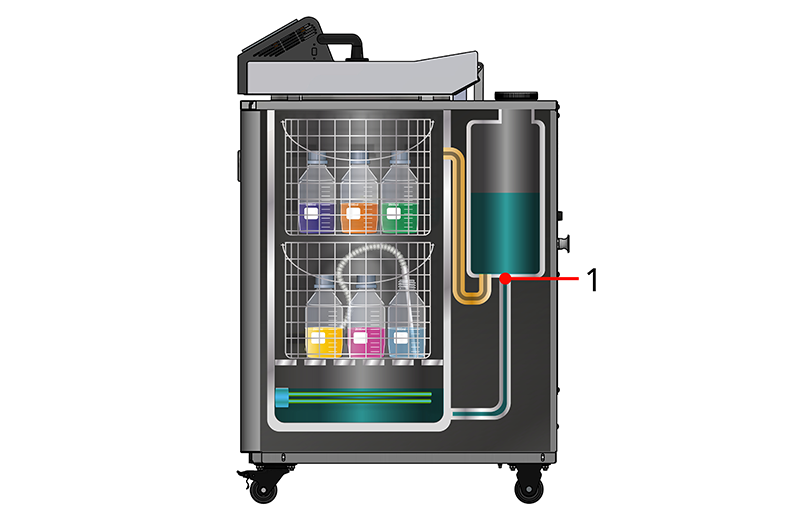
- Valve between Reservoir and Chamber opens
Diagram 4:
Heating and Air Removal
The autoclave switches on its heater, heating the water and generating steam. The exhaust valve is opened, and the steam forces air out of the chamber and out of the exhaust via the Ecofill reservoir.
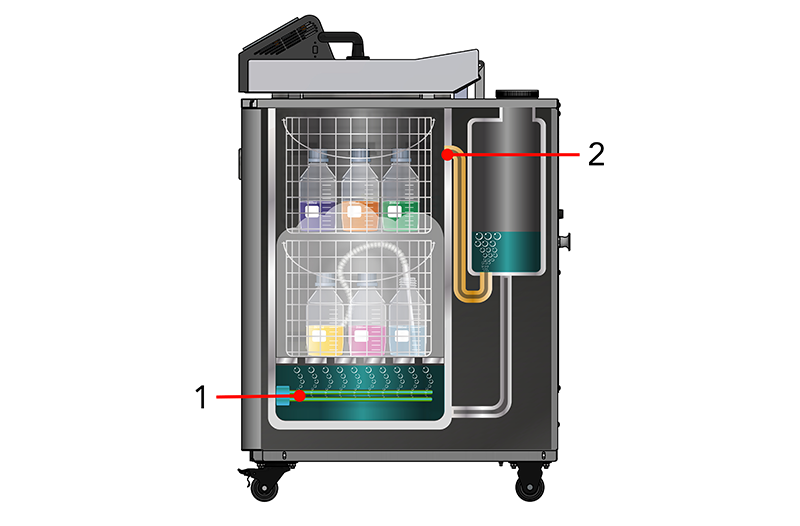
- Heater On
- Valve between Reservoir and Chamber opens
Diagram 5:
Pressurization and Sterilization
Once all air has been forced out of the chamber, the exhaust valve is shut. As more steam is generated, it has nowhere to go, causing the pressure in the chamber to rise. The increasing steam pressure forces down on the water, requiring more heat energy for the water molecules to escape and become steam. As the water continues to be heated, steam is produced at temperatures above 100°C. When it reaches temperatures above 121°C, the items in the chamber begin sterilizing. At 121°C, a minimum of 30 minutes is required for sterilization. At higher temperatures, sterilization occurs more quickly.
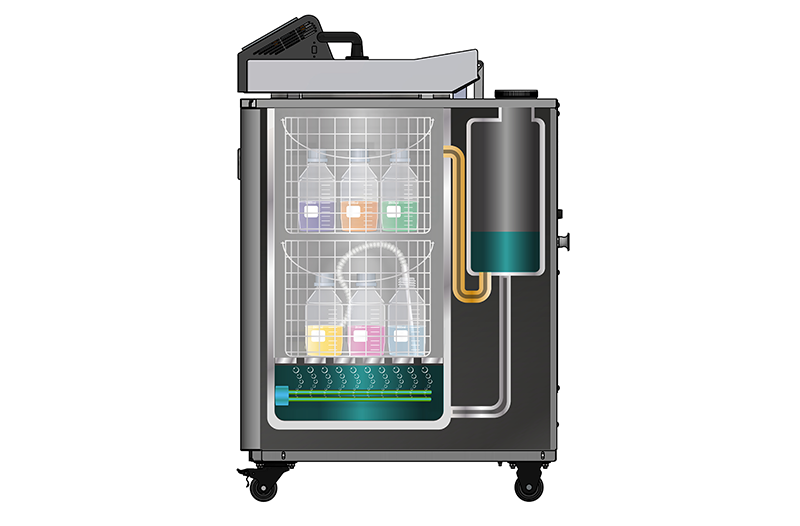
Diagram 6:
Cooling and Water Recovery
Once sterilization is complete, a valve is opened, and the pressure produced by the steam in the chamber forces the water out of the chamber and back into the Ecofill Reservoir. The water in the chamber is now hot and will retain that heat to assist in a subsequent sterilization process. This helps to remove heat from the chamber, allowing it to cool faster.
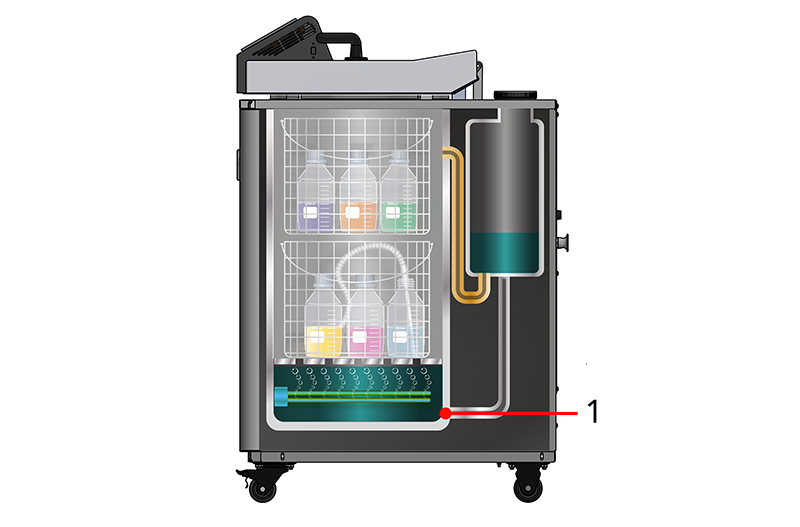
- Valve between Reservoir and Chamber opens
Diagram 7:
Capturing Steam
Pressurized steam is vented from the exhaust via the Ecofill reservoir, capturing water and heat.
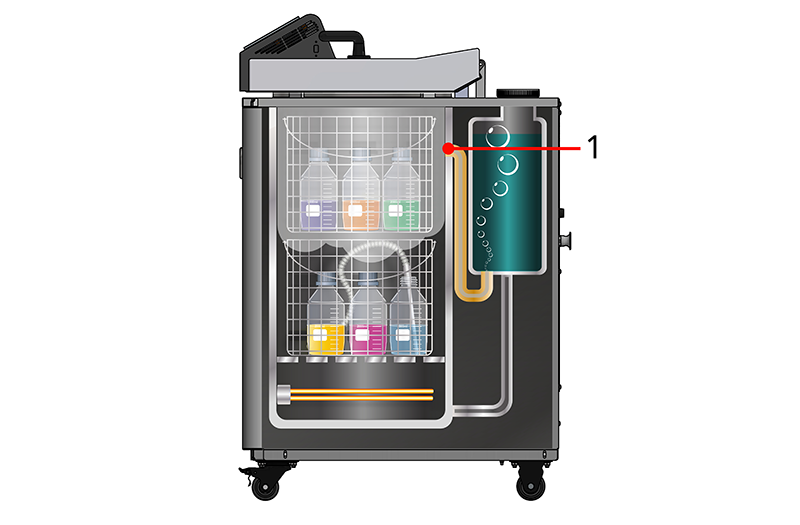
- Valve between Reservoir and Chamber opens
Diagram 8:
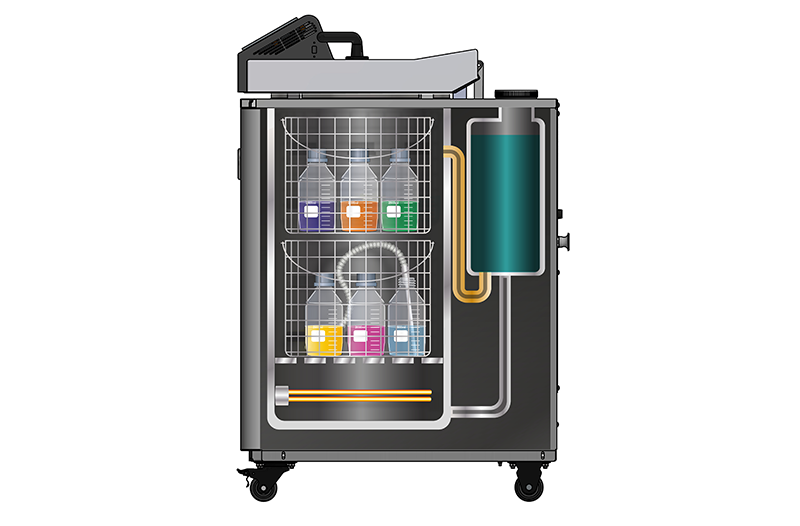
Pressure Drop and Unloading
The chamber and its contents cool. As they do, the pressure in the chamber drops to match the external environment. When pressure is equalized, the chamber door can be opened, and the now sterile items can be removed.
Learn more with Astell Articles
With over 140 years of experience in autoclave manufacturing, Astell understands steam sterilization inside and out. Explore expert insights, guides and technical knowledge in the Astell Articles Archive.
