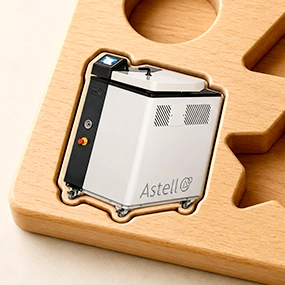
Astell has been helping organisations achieve effective steam sterilisation for more than 140 years. Over that time, we have learned not only how to manufacture autoclaves, but how real users choose, install, validate and operate them in imperfect working environments. This article is based on lessons from an anonymised real-world replacement project, where the main challenge was not the sterilising cycle itself, but the room the autoclave had to fit into.
The challenge: the room set the limit
Measuring is always an essential step when purchasing an autoclave. “Will my planned load fit in the autoclave chamber?” is the usual first question, but not always the last – in this example the question “will the autoclave fit in the room?” had to be asked too, making for a nesting doll of measurements.
In this anonymised project, a personal-care and cosmetics manufacturer needed to replace an ageing top-loading autoclave, but the lab simply did not have the space to take the front-loading replacement the team would otherwise have preferred.
That is a more common situation than many buyers expect. QC labs are often constrained by the building around them: a doorway, a low bench run, a ceiling height, a floor that needs checking before a heavier unit goes in, or a room layout that cannot easily change. The question stops being, 'What is the best autoclave on paper?' and becomes, 'What is the best autoclave that works here?'
The solution: specify for the space available
The answer was a 135-litre top-loading autoclave, chosen to match the footprint of the unit it replaced and to sit in the same position. The floor was confirmed as suitable for the load, and the format allowed the lab to gain a modern, validated replacement without redesigning the room around it.
The workload was typical of a busy product-testing lab: liquid media, glassware, plastics and contaminated discard. In practice, the same machine needed to help prepare clean material at the start of the day and render waste safe before it left the lab.
The configuration that made the difference
Several specification choices carried most of the value. Load-sensed process timing meant the sterilising hold was timed from the temperature in the load rather than from the chamber alone, so both part-full and fully loaded runs could reach true sterilising conditions. For the steady sterilization workflow, simple fan-assisted cooling helped bottles cool quickly enough to support around three cycles a day. Validation and calibration ensured the autoclave processed the loads efficiently and within required tolerances.
A typical arrangement for this kind of workload would be liquid media in vented bottles on a 121 °C cycle held for 15 minutes, with a probe in a reference bottle, alongside a separate discard cycle for contaminated plastics before disposal.
What this means for other labs
When space is the binding constraint, the most important work happens before the order is placed. Footprint, access route, floor loading, door swing and service positions all need to be considered early. Discovering those issues on delivery day is expensive; designing around them at the start usually makes the right machine much easier to choose.
How Astell can help
In this project, Astell helped the customer work within the limits of the existing room, selecting a replacement autoclave format, capacity and validation package that suited the space and the workload. If you have a similar replacement challenge, or another autoclave-related question, contact Astell to discuss it. With hundreds of autoclaves available, highly customisable builds, versatile installation options and an expert team of in-house service engineers, Astell has the skills and experience to help solve your steam sterilisation challenges. Contact Astell today at Info@Astell.com.