Astell has been helping organisations achieve effective steam sterilization for more than 140 years. Over that time, we have learned that some users need every process to be not only effective, but defensible. This article is based on lessons from an anonymised public-health laboratory project, where consistency, traceability and routine usability were central to the autoclave specification.
Why evidence matters
A public-health laboratory carries a particular weight. The results it issues can inform official decisions, so the processes behind those results must be defensible. That standard reaches all the way down to how the lab sterilizes its media and disposes of its cultures.
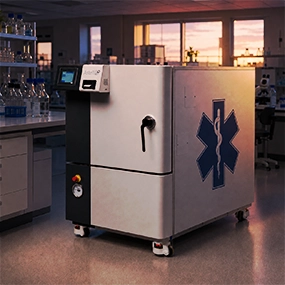
In this anonymised project, the user selected a 153-litre front-loading autoclave for a government public-health laboratory. The requirement was not simply to process loads, but to process them consistently and retain evidence that the process had been completed correctly.
Why a front-loader suited the workload
A 153-litre floor-standing front-loader suits a lab with the space for it and a steady, mixed workload. The format places the chamber at a comfortable working height and is well suited to routine operation by several users across the working day.
For this kind of lab, the autoclave typically supports the full range of laboratory work: sterile media and reagents for testing, glassware turnaround, and decontamination of cultures or samples before they enter the waste stream.
Traceability as part of the specification
Public-sector laboratories need consistent cycles and usable records. It is not enough for the machine to have run; the lab must be able to show what ran, when it ran, and whether the defined sterilizing conditions were met.
This is where the controller specification does the work. An Astell controller records cycle data on board — up to 5,000 sterilization cycles — and saves each run as a log file, with a password-protected PDF archive generated automatically, so the evidence of what ran, and whether it held its parameters, is captured without anyone transcribing it by hand. How that record leaves the machine is itself a specification choice: exported to USB, sent to an optional built-in audit-trail printer, or passed over an optional Ethernet connection into the laboratory’s own systems. That Ethernet route has been specified precisely to satisfy sites that could not accept encrypted USB drives, exporting cycle logs directly into the customer’s own independent monitoring system rather than relying on removable media at all.
Where accountability matters as much as the record — as it often does in public-sector work — an optional 21 CFR Part 11-compliant software version adds user-level control. Operators log in under their own credentials, every interaction is attributed and audited, and the cycle logs are protected against later alteration. That is the difference between “the cycle passed” and “this named operator ran this cycle, and here is a record that cannot be quietly changed.”
None of it counts for much, though, unless the cycle was sound to begin with. That is what calibration and validation provide: a prescribed load layout, confirmation with placed probes that the load itself — not just the chamber — reaches temperature at the right rate, and regular re-checking against a reference standard. A laboratory might specify any combination of these — on-board records, printout, network export, Part 11 user control and periodic validation — according to how much it needs to prove, and to whom. Records show what happened; validation is what makes what happened trustworthy.
A typical arrangement might include a media cycle at 121°C held for 15 minutes for prepared broths and agars, alongside a separate discard cycle for contaminated material. The details depend on the lab's procedures, but the principle remains the same: clean material must be prepared reliably, and contaminated material must be made safe before it leaves the controlled area.
What this means for public-health labs
For this type of buyer, the decisive qualities are consistency, traceability and straightforward operation. Reliability is not an extra feature in public health. It is part of how the lab protects the credibility of its results and the safety of its waste stream.
How Astell can help
In this project, Astell helped the customer specify an autoclave suited to public-health laboratory work, with the consistency, traceability and usability needed for defensible operation. If you have a similar public-sector, laboratory or compliance-led requirement, or another autoclave-related question, contact Astell to discuss it. With hundreds of autoclaves available, highly customisable builds, versatile installation options and an expert team of in-house service engineers, Astell has the skills and experience to help solve your steam sterilization challenges. Contact Astell today at Info@Astell.com.